Blog

Experienced with Birthdays

Later in 2026, the United States will celebrate 250 years since the Declaration of Independence. Parades, speeches, firework displays, and other festivities are planned across the nation.

Several cities now within the United States were already founded and sinking roots deep into North America. One of these was St. Louis. Twelve years before the colonial congress passed their resolution making the Revolutionary War official, this city was founded as a modest trading post.

Therefore, the area is experienced in celebration a 250th birthday. Wisely, not all the celebrations were centered on the actual February anniversary. (Weather varies more than usual in that month.) Yes, some took place that day. But others were spread out in both time and geography.

Scattered throughout the area were 250 sturdy and uniquely decorated birthday “cakes”. This one had pride of place in one of the city parks. Others were placed in front of historic sites and businesses. Some ambitious people made a challenge of it and hunted down all 250.

Fifty states and 250 years. Simple math tells us we only need to find five sites per state to replicate this event nationwide. (I wonder if anyone even suggested an idea from “fly over” country.)

Never discount the importance of a birthday. The sweet, later-in-life romance, Fine Lines, opens a day after a minor character celebrates a milestone. Defense attorney Mandy Price finds the police detective Cal Collins memorable — but off-limits for her profession. Is he? And how many secrets is he allowed to keep? Check out the blurb and pre-order information at the link: https://bit.ly/49FtvjF

Blog

The King on the Hill

Louis IX of France lived in the wrong century to travel to America. He was admired for many fine qualities and accomplishments during his lifetime. And approximately twenty-seven years after his death he was canonized — hence the name, Saint Louis.

Fast forward to the year 1764. French traders establish a trading post on the Mississippi River, just south of the confluence with the Missouri River, and name it Saint Louis in his honor.

The city grew, became a center of manufacturing and trade until the mid-20th century. Today the city has a lower population than the surrounding St. Louis County but remains an anchor in the region. And the king on the hill?

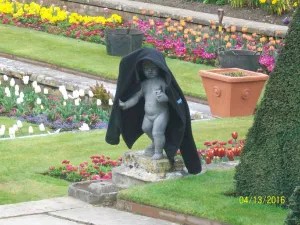
You can find this representation of Saint Louis (aka. Louis IX) in front of the St. Louis Art Museum. He has a great view of a large portion of Forest Park.

Art is an important, yet unspoken, portion of life to Cal Collins. With a satisfying primary job of police detective, he keeps his fine artist activities quiet. However, nothing lasts forever. Seek out the later-in-life romance, Fine Lines, to learn more about Cal — and the defense attorney who puts his life into turmoil.

The book is available for pre-order with shipment on April 8. Follow the link to the Barnes & Noble site: https://bit.ly/4rVvd7M

Blog

By the Light of the…

Horses don’t wear headlamps. Only the most expensive carriages had lamps. Street lamps – coal gas – arrived in the large cities first.

Look to the sky for your light.

Earlier this month, we were graced with the final full moon of the year. It was a beauty! Can you imagine using this light to either walk or ride your horse to visit your sweetheart? Perhaps you treated her to a moonlight carriage ride. (If her father/guardian approved.) Warm or cold, this secondary sky light calls you outside.

The residents of fictional Elm Ridge, Illinois kept an eye on the moon’s cycle. On a clear, full (or near full) moon night a person had no need to carry a candle lantern in 1851. In the sweet romance, Stitching a Dream, the characters keep a lantern nearby during the long winter evenings. More book information is at the link: https://amzn.to/3VwoeFh

Happy New Year, faithful reader!

Blog

Tools of the Trade

Not so many decades ago, this is the equipment used to milk the dairy cows. Twice a day (sometimes thrice) the farmer, and perhaps family members or a hired hand, would milk the cows and put the milk to cool before the truck from the dairy picked it up.

Milking by hand? Note the bucket and stool.

Milking by machine? Note the surcingle (belt) around the cow. The one is this display is not well adjusted. The handle of the unit is set on the metal portion of the surcingle and the inflations (rubber insets in metal) are slipped over the teats.

The cow is usually peaceful and calm, head in the stanchion and sometimes with a little hay to chew while the humans, or machine, takes her milk.

How long ago? This type of machine was used well into the 1960’s in the heart of daily country. Herds were smaller then, seldom more than 50. The change to milking parlors was underway.

One of the farmers in New Dreams, a sweet historical romance, wants to start a dairy. Step back into 1851 and join his cousin during her first year in America. Follow the link to more book information. https://amzn.to/3vWydWE

Blog

Winter Work

You needed to be strong and quick for this work. Stout boots were a must. Outdoor winter clothing required. After all, you were building a legend — you were the kernel of truth behind Paul Bunyan.

You worked in the northern woods felling trees and skidding/hauling them to frozen rivers and streams. Oxen and horses shared your working conditions along with a few mechanical beasts in the later years.

Guiding logs into the river, preparing to raft them downstream to the sawmills. You needed to be alert and have an excellent sense of balance. More than one man drowned while doing this work.

Fictional Elm Ridge, Illinois has a sawmill powered by a creek. They buy white pine rafted down from Minnesota in the sweet romance, Stitching a Dream. An owner rough around the edges gives Polly Black a few sleepless nights as she weighs options of bad and worse. Check out the book blurb at the link. https://amzn.to/3VwoeFh

Blog

Equine Enjoyment

After the work day — or when the humans take a day off — the animals get to relax. This pair has long days without pulling farm equipment or wagons for they are lucky and live at a historical site.

Sometimes I wonder what a farm horse’s favorite task was. I doubt it was plowing — pulling a sharp blade through the field is hard work. Pulling a seeder or planter would be better. The implement does not dig deep into the earth. Perhaps pulling a mower or hay rake? All the work is above ground. Best to go steady to keep the gears turning and the work progressing. A wagon? Hmm. I suppose it depends on the load. Hay can be awkward. Rock for construction is heavy. Grain to the mill? Can we nibble on any spillage?

In the sweet romance, New Dreams, Hans Hoffmann finds employment at the livery and freight company. He starts with a lowly task — cleaning stalls and harness. He likes the work — and the horses like him — but the real story is between the people in this 1851 tale. Follow the link for more story details. https://amzn.to/3vWydWE

Blog

Saddle Up!

Start your day with exercise. Actually, for pairs — each rider and their horse will get lungs full of fresh air and a morning work-out.

Until about a century ago, a horse and rider would have been a familiar sight in most of the United States. However, in recent decades you no longer find them mixed in with motorized traffic. Instead you will find them on designated trails in parks and on private ranches and estates.

Need a little help with your balance? Take riding lessons. Have fear of large animals? Visit a stable and meet some gentle giants.

This pair of saddles are displayed at property once owned by a horseman of note: U. S. Grant. Can you imagine him riding the perimeter of a camp — wearing a slouch hat and smoking a cigar?

Fictional Elm Ridge, Illinois is located a bit south of actual Galena, Illinois — a town where Grant lived immediately prior to the Civil War.

Open the pages of the clean & wholesome romance, STITCHING A DREAM, and step into 1851. Dirt streets, wooden sidewalks, and tension between native-born and immigrant. When does a person become American? Follow the link for book details. https://amzn.to/3VwoeFh

Blog

Up, Up, and Around

Not many staircases in public buildings have been in daily use for 170 years.

An exception would be the one in the east wing of St. Louis’ Old Courthouse. Installed when the 1828 courthouse building was replaced, it is believed to have been installed in 1854. The staircase is iron, ascends 32 feet from the first to third floors, and is entirely supported by embedding into the wall.

Look Ma! No posts!

More than once I’ve climbed these steps in one of my favorite downtown buildings. Twice, I’ve gathered the courage to climb a different set of iron stairs to take in a closer view of the rotunda decorations. (I’m timid with heights — it’s a l-ooo-ong way down.)

The sweet romance, New Dreams, takes place in 1851 – the year St. Louis got serious about replacing the 1828 section of the courthouse. The city was busy — steamboats bringing arrivals from Europe and many of the Eastern states. Join two of these European newcomers as they collect first impressions of America. Click on the link for the complete blurb and purchase information. https://amzn.to/3vWydWE

Blog

An Act of Hospitality

Welcome to our community. Join us for a meal. Let’s get acquainted over hearty fare.

Invitations like the above have been issued in America for generations and centuries. Towns, cities, and communities grew with new arrivals — often single men or families. Established residents often invited the newcomer to join them. News was exchanged. Employment opportunities were discussed. Food was eaten and drinks were served. Lives were enriched for both the host and guest.

The set table pictured gives a peek into 1830’s hospitality. Butter knives were not meant to cut meat. Sharp-tined forks encouraged caution. This table features a sugar cone — use your knife to remove a small portion for your hot tea.

In the sweet romance, Stitching a Dream, an established carpenter invites the new shoemaker, Kurt, to Sunday dinner. Imagine stepping into the house to the delightful aroma of simmered meat after a church service. A bachelor, must speak carefully around the family’s young adult daughters. Click on the link for more information and read the book to learn who captures Kurt’s heart. https://amzn.to/3VwoeFh

Blog

The Name means “Peace”

Immediately north of Shiloh Church, a name which means “peace”, one of the early, large, bloody battles of the American Civil War took place. It was a two day conflict across April 6-7, 1862.

The Union Army was moving south. The Confederates needed to protect the rail connection at Corinth, MS. The Confederates attacked raw, Union troops near the Tennessee River landing of Pittsburgh. It was tough. It was bloody. Men died. Men were wounded or captured.

A small sample of the cannon involved in the battle. The Confederates’ line of sixty-two (62). The Union countered with fifty-three (53). By the afternoon of the second day, the Confederates withdrew and the Union troops were slow to pursue.

Many of the men involved in this battle, the entire war, were schoolboys in the year 1851. They matured quick or suffered consequences in the army.

Fictional Elm Ridge, Illinois, in the year 1851, is the setting for the sweet romance, New Dreams. New to America, Deutsch settlers are thinking of opportunity in peaceful professions — such as baking or honest labor. Click on the link provided to find out more about this tale of young people in a young land. https://amzn.to/3vWydWE