Blog

Garden Assistant

When you have a large garden, it’s helpful to have more than one person doing the work.

When I was a girl, gardens were medium to large on the farms and in the villages. The work was done by the lady-of-the-house with assistance from children. Ocasionally, the man-of-the-house would assist. Often this took the form of preparing the ground, some of the planting, and selected harvesting.

The weeding, day-to-day harvest, and preserving of the produce fell to the women and children.

Over the centuries, the nobles and richer persons have hired gardeners. Often men, this was their full-time job. Preparing the ground, planting, weeding, trimming, and harvest. Kitchen gardens, herb gardens, and flower beds flourished under their care. On large estates, they often hired assistants, or found one in unexpected places.
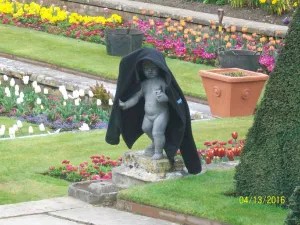
This silent helper holds the gardener’s coat on a warm day.

New Dreams is a historical romance set in 1850’s Illinois. A portion of the immigrant Louisa’s job is to tend the garden at the bakery. As the chore girl, she has other tasks also — some of which are far removed from the baking she yearns to do. Check out the book blurb at the link: https://amzn.to/3vWydWE

Blog

Refreshing Sight

Europe does not lack for beautiful scenery. Mountains. Rivers. Forest. Shoreline.

Can you imagine living where you can see a mountain each day?

I’ve done it here in the USA. It was nice to look out the back door and see snow-capped mountain. Or, in that case, volcano. (We lived in Washington state at the time and the scene was Mt. Baker.)

No fear of this alpine feature exploding.

Immigrants from Europe did not relocate to the United States for lack of interesting geography. My ancestors, and thousands of other, came for opportunity.

Opportunity to own land.

Opportunity to worship a non-state religion.

Opportunity to practice a trade or profession.

Opportunity for education– in recent decades.

Economic times were difficult in Europe for the characters in the historical novel, New Dreams. Join them on their journey (an adventure in itself) and those first critical months in a new land. Here’s a link to the book blurb: https://amzn.to/3vWydWE

Blog

Is Bigger Better?

During my multiple decades, I’ve lived in a variety of houses and apartments. They ranged in age from built in the 1880’s to new. None of them would qualify as large. In fact, “tiny” would fit one of them.

When selecting and arranging furnishings, I’ve learned to consider size — of the room and the piece of furniture.

What about your home? For example, do you have steps to the backyard and desire a light fixture? I found this one of classic design on vacation one year.

Is it a little large for your space? You need to admit, it is proportional with the backyard. (A space close to our small Midwestern farm.) Perhaps abandoning the idea of bringing this home was a good idea. I rather doubt it’s for sale within my budget anyway.

In frontier America, the size of the cabin was sometimes dictated by the length of the available logs. As sawmills were built, buildings tended toward frame rather than log. But size remained modest for most people. Including the residents of fictional Elm Ridge, Illinois. With a mixture of log, frame, brick, and stone construction, the size and appearance often reflected the income and status of the owner. (Four-story brick hotel excluded.)

When reading the historical romance, New Dreams, think modest for the building size. The bakery is large enough to have a generous workroom — but the sales area and the storage room — with alcove for hired help to sleep — run rather small. Farmhouse kitchens with open dining sometimes occupied half of the house — and the only heating source. Enough space to live, but not much extra, take the messy part — and the laundry — outside.

While I enjoy reading about 19th century America, I’m glad to live in the 21st century. Here’s a link to the past: https://amzn.to/3vWydWE

Blog

Elegant Emblem

Relax and daydream of romantic love. Not interested? Turn your thoughts to fidelity, commitment, or loyalty.

What comes to mind?

Did you happen to think of a large, white bird that glides in the water and waddles on land? I’m thinking of the swan. Used for centuries to prompt thoughts of the positive traits listed above.

Across centuries and cultures, this waterfowl has come to symbolize similar traits. If you don’t care for the previous list, try grace, protection, or good omens.

The next time you see a swan glide across a park lake take a moment to dream a little. Perhaps you long for some of the loyalty, fidelity, or protection they represent.

Immigrants come with dreams. Safety. Opportunity. Reunite with loved ones. The fictional characters in the wholesome historical romance, New Dreams, are no different.

Dreams are slippery. You may begin a journey with one set, suffer through obstacles, and emerge with a different dream. Characters, like actual people, start a path, change course, and end up with something unexpected. Let’s hope the change is for the better.

Here’s a link to the book blurb. https://amzn.to/3vWydWE

Uncategorized

Grateful Hearts

Think back to the lockdown days of COVID-19.

Now multiply the uncertainty, fear, and deaths by a factor of twenty or more.

You now have an idea of the situation in the city of Vienna during the plague in 1679. When the worst was over, the survivors gave thanks. Leopold I ordered a monument built to reflect the people’s gratitude. Completed in 1693, today the column proudly stands as a reminder of the city’s hope and resilience to everyone who passes.

The Plague, or Black Death, did not sweep through the United States during early settlement. However, other diseases — smallpox, diphtheria, scarlet fever, and measles — moved through communities and claimed many victims.

In the wholesome romance, Stitching a Dream, several schoolchildren become ill during an outbreak of a common (at that time) disease. Set in 1851-52, treatment options were limited. With tropes of single mother and friends-to-lovers, this novel earns a closer look. Follow the link for the complete blurb. https://amzn.to/3VwoeFh

Blog

New Frame – Old Style?

The settlement on the banks of the Isar River grew slowly at first. However, the location was good and the people persisted. Today, the city of Munich recognizes 1158 as their founding year.

You won’t find buildings from that time as you walk the streets or gaze at a rooftop view from a high point. Actually, many of the structures which look several centuries old date from the mid-20th century. World War II damaged approximately half of the buildings. During the reconstruction in the following decades, the people of Munich rebuilt in the former style.

I should have started European travel sooner. My time in this city was short — a return trip would be good.

Thousands of immigrants from Bavaria and other Germanic States arrived in the United States during the 1850’s. Was it good or bad timing that many of them became established in occupations in time for their new home to suffer a Civil War?

Fictional Elm Ridge, Illinois is on the Mississippi River. The waterway was busy bring supplies and people to settle in this new land. Some continued to the north. Others stayed for varying lengths of time. Always, the most restless moved West.

Readers of wholesome romance will find a story including the clash between American and Deutsch in Stitching a Dream. Who can call themselves American? Follow the link for complete book blurb. https://amzn.to/3VwoeFh

Blog

Wanted: Plumber with Experience

Have you ever turned the tap and stared at the nothing which emerged? Or perhaps you got a drip of something rather brown. Either way — after checking for a simple remedy or two — you decided you needed an expert.

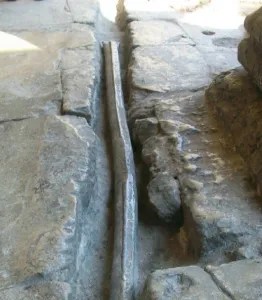
May I suggest the person who installed this pipe?

Oh, you can’t get the exact workman. Perhaps one of his descendents. After all, anyone who could install a plumbing system which continues to work after fifteen or more centuries had to be brilliant.

Recessed in the stone floor and placed at the correct angle for slow, constant flow, this lead pipe in Bath, England demonstrates the engineering savvy of the Ancient Romans.

You won’t find any Roman engineers in the wholesome, historical romance, Stitching a Dream. However, you will find a young American boy fascinated by tales of brave knights. This story is recommended for readers of all ages who enjoy a historical background to a single-mother, friends-to-lovers tale. Follow the link for more information. https://amzn.to/3VwoeFh

Blog

Ancient Heritage?

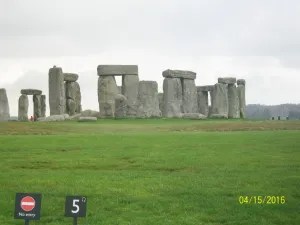
No one disputes that the stone arrangement is ancient. Time estimates may vary. And you’re not going to find written text with an explanation.

One of the many things confirmed by Stonehenge, and other stone circles in Great Britain, is that people lived in this area for a great many centuries.

Beginning in the 17th century, some of these residents adventured and moved to the New World. They started settlements along the east coast of what would become the United States in the latter portion of the 18th Century. Following generations of these settlers, and new arrivals, continued to found trading posts, villages, and towns in a generally westward direction.

In the mid-19th century, much of the land east of the Mississippi River was dotted with farms, towns, and factories. This was a time of steam engines (on boats and rails), new inventions, and much European immigration.

Check out the wholesome, historical romance, Stitching a Dream, to find a story set along the Mississippi River and filled with the tension and questions of who dare call themselves American. Just follow the link for the entire blurb. https://amzn.to/3VwoeFh